How to compare two humic fertilizer specifications before buying in bulk
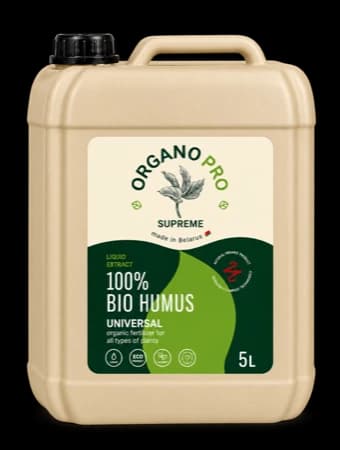
Before buying a humic fertilizer in bulk, compare what each supplier actually specifies, whether the figures share a definition and basis, and how much product the intended application requires. A higher percentage or a lower price per litre is not enough to rank two offers.
1. Are the two specifications describing the same thing?
Put the product form and each claimed fraction side by side. “Humic substances”, “humic acids” and “fulvic fraction” are not automatically interchangeable. Humic and fulvic fractions are operationally separated by extraction and acidification; they are heterogeneous mixtures, and their properties depend on source and isolation conditions. International Humic Substances Society.
Ask each supplier to define the reported fraction, identify the test method and explain whether a total includes the listed components. An alkaline extract's acid-soluble fraction can contain non-humic material, so an unexplained “fulvic” figure alone is not sufficient to establish like-for-like composition. IHSS isolation procedure.
2. Are the units, basis and methods comparable?
A percentage by mass of the liquid as sold is different from a percentage of dry matter. For a figure expressed as mass percent of the liquid as sold, multiply the fraction by the liquid density in kg/L and by 1,000 to obtain g/L. A dry-matter figure also requires the dry-matter fraction of the liquid. Use values applicable to the quoted product and obtain the supplier's confirmation before comparing.
Even identical units do not settle whether different methods measure the same fraction. Ask laboratories or suppliers to explain differences and whether the results can be compared. ISO 19822 describes a procedure for humic acids and hydrophobic fulvic acids in dry and liquid materials used as fertilizer or soil amendment ingredients, and geological deposits. It does not establish that every claimed fulvic-acid result uses the same method or is comparable. ISO 19822 scope.
3. What does the intended application require?
Compare current instructions for the exact products: crop, application method, timing and rate. For a farm, check the irrigation system or sprayer, water and any planned tank mix with the supplier. For an importer or distributor, add label language, product documentation and registration requirements for the destination market. Do not assume that one product's instructions apply to another.
4. Which offer costs less for the planned use?
Consider an illustrative example, not quotations or ORGANOPRO product rates. Supplier A quotes €4/L with an instructed rate of 3 L/ha; supplier B quotes €6/L with an instructed rate of 1.5 L/ha. Product cost is €12/ha for A and €9/ha for B. For 1,000 ha at one application, the corresponding quantities are 3,000 L and 1,500 L, and product costs are €12,000 and €9,000 before freight, taxes and application costs.
This arithmetic identifies the cost at the stated rates; it does not establish equivalent agronomic performance or that either offer is suitable. Compare only rates that the respective current instructions support for the intended use. Add freight, packaging, handling, payment terms and other relevant costs to each quotation; do not assign values until confirmed.
5. What must be resolved before committing to the order?
Record the unresolved points and request written clarification: the defined fraction and method; reporting basis and any conversion inputs; application instructions; price, volume, packaging and delivery terms; and market-specific documentation. A specification describes what is offered or agreed; evidence concerning an actual shipment is a separate question. See how to connect an analysis to the offered batch.
Ask ORGANOPRO for the current specification and instructions for the selected product. For example, review ORGANOPRO SUPREME and request its current specification and instructions. Include your crop or sales channel, destination, intended application, volume and preferred packaging so the offer can address the same purchasing conditions.
Request a product specification and supply discussion
Andrey Nilov, CEO of ORGANOPRO · LinkedIn

Let’s connect on LinkedIn
Let’s exchange ideas about current issues in agriculture, soil fertility and the challenges farmers face. I’d be delighted to connect and have an open conversation.
Warm regards, Andrey Nilov
CEO of ORGANOPRO
Connect with me on LinkedIn Connect with me on LinkedIn